Run the room,
not the slides.
Stridor turns a lecture hall into a live ICU. Patient cases, a full ventilator trainer, lecture decks and live polls, all driven from one console while every student follows on their own phone.
The patient is on the screen.
Run a realistic case from the front of the room: the patient at the bedside, a live monitor and an order menu, all on one screen.
One patient, one monitor, and the orders that change it
Draw a gas, escalate oxygen, start BiPAP, wean him down. A live physiology engine computes the response, the photo of the patient changes with his condition, and the whole class reads the result together. Twelve patients, each a full chart with history, prior labs, imaging and a monitor that evolves with every decision.
A ventilator, not a diagram.
Eight modes with live pressure, flow and volume waveforms, the loops, and holds to separate a resistance problem from a compliance problem.
The physics, not a table.
Pick an adapter and it fixes the FiO₂ and the air:O₂ ratio; set the flowmeter and it drives the total flow, not the percent. Then weigh that total flow against the patient’s peak inspiratory demand to see whether the FiO₂ is guaranteed or drifting.
Your whole course, on every screen.
A full set of lecture decks, from breath sounds and blood gases through aerosol therapy, airway management and mechanical ventilation.

Push a deck to the projector and every phone
The class reads along on their own screen instead of squinting at the front or photographing it. The decks run in order, so what’s on the projector and what students study stay in step.

Rhythm recognition on realistic strips
Dual-lead strips on calibrated paper, generated so the rhythm holds up to a careful reading. Pick your two leads, read the tracing, and let the class answer live. The same 12-lead engine runs inside every case at the bedside.
Follow a breath from the air to the cell.
An interactive 3-D walk through oxygen transport that the class steps through together, following a breath down the airways, across the alveolar membrane, out to the tissues, and into the mitochondria.
Down the bronchial tree
Each breath branches through the conducting airways, dividing from trachea to bronchi to bronchioles until it reaches the alveoli where gas exchange happens.
Across the alveolar membrane
At the alveolar-capillary membrane, oxygen diffuses down its partial-pressure gradient into the blood while carbon dioxide moves the other way. That exchange is the whole point of ventilation.
Carried out to the tissues
Bound to hemoglobin and dissolved in plasma, oxygen rides the arterial blood out to the systemic capillaries, where delivery depends on both oxygen content and cardiac output.
Into the mitochondria
Inside the cell, oxygen is the final electron acceptor in the mitochondria, driving the aerobic metabolism that keeps tissues alive.
Where the program actually stands.
Class and student reporting broken out by NBRC content area and course outcome, with class accuracy, participation and session history. Export any of it to PDF.
The rest of the bedside.
Breath sounds
Auscultate the patient and hear crackles, wheeze and diminished sounds that change as treatment takes effect.
ABG interpretation
Draw a gas that agrees with the patient in front of you and reason through acid-base and oxygenation.
Concept modules
Short interactive lessons, like the oxygen cascade, that make invisible physiology visible.
425+ practice questions
A bank students drill on their own time, spanning acid-base through ventilator management.
One console, one shared screen.
Cases, decks and modules all run the same way: you drive, and the room follows.
Start a session
Open a case, a deck or a module, share the class code, and go. Students join in a browser on their own phone.
The room syncs
The projector and every phone show the same live screen as it changes, whether that is a monitor, a slide or a rhythm strip.
The class answers
Treat the patient, or send a question and watch the answers come in live. Everyone works from the same picture.
See where they stand
Every response feeds the class and student reports, by outcome and by NBRC content area.
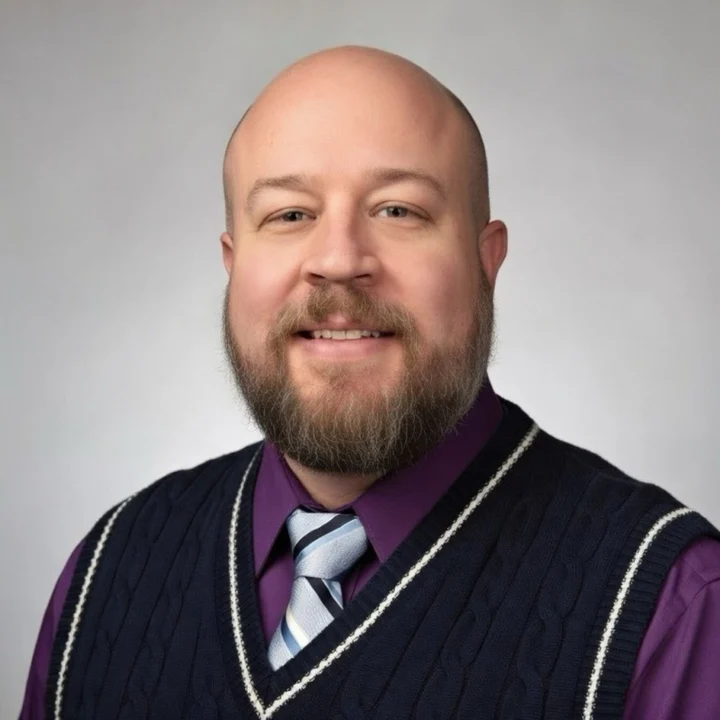
Built by one of your own.
Hi, I’m Tim McMahon, MS, RRT-NPS, RRT, LPC: respiratory therapist, educator, counselor, and software developer. I worked bedside critical care through the COVID-19 pandemic. I spent the summer of 2026 building Stridor, one RT’s attempt to bring the ICU into the classroom.
Stridor is a personal, independent project. No team, no sponsors, no company. Just me.
Connect on LinkedInWant to talk shop?
Stridor is built for RT education, from breath sounds to the NBRC boards. It’s early. If you have thoughts, questions, or ideas, send them my way.
Get in touch